Gibbons Sidewalks and Trees Plan
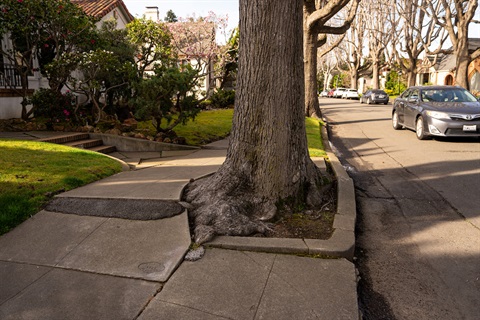
The Liquidambar (sweetgum) trees form a distinctive canopy that provides shade, seasonal color, environmental benefits, and a strong sense of place for the surrounding neighborhood. At the same time, the size and extensive root systems of the mature trees, combined with constrained growing space within the public right-of-way, have resulted in significant and longstanding conflicts with sidewalks, curbs, gutters, drainage, and other infrastructure. In many locations, these conflicts have contributed to uneven sidewalks and other conditions that affect pedestrian safety and accessibility.
The ultimate objective of the plan is to balance public safety, infrastructure needs, and the preservation of Alameda’s beloved urban tree canopy.
Draft Plan Posted for Public Comment
Review the Draft Plan(PDF, 5MB)
Learn more about the project's development, community engagement, and the City's recommended approach. Some of the content is summarized in the sections below. Note that this draft Plan does not yet include all Appendices or supporting materials, although many are posted at the links below (e.g. meeting slide decks, community comments). The public comment survey is open for your feedback until October 23rd, and will support further Plan development.
Provide Comments about the Draft Plan
This Plan, in its revised form after receiving community comment, will be presented to City Council for consideration in December 2026.
A timeline of the project thus far:
Click the timeline image to be redirected to a text description.
Tree Assessment and Proposed Approach
Five (5) trees were posted and removed in April 2026 due to their condition. No decisions have been made at this time about other Liquidambar tree removals or extensive sidewalk reconstruction. Of the remaining 112 Liquidambars, the Tree Inventory and Assessment completed by HortScience identified 88 Liquidambars in good condition, 24 in fair condition, and none were rated in excellent condition.
Taking into consideration community input, the preservation of Liquidambar trees, the gradual evolution of the tree canopy and corridor character, safe and accessible sidewalks, and functioning drainage facilities, staff is recommending a “location-by-location” approach.
Prioritizing based on the severity of existing impacts to sidewalks, curbs, and drainage, the City would evaluate each site's tree and tree root conditions, accessibility requirements, surrounding infrastructure, and feasible creative alternatives before determining the appropriate solution. Creative alternatives may include sidewalk meandering (a somewhat curved path), grinding sidewalk transitions, curb bulb-outs for additional space for the tree roots, and careful root pruning.
The goal at every location is to preserve healthy, mature Liquidambar trees however possible through practical and sustainable solutions. Tree removal may be necessary if infrastructure or accessibility needs cannot be met while preserving the tree. In the City's proposal, there would be a maximum removal rate of 20% of the remaining Liquidambars, every five years. The location-by-location approach does not assume that 20% of the remaining trees will be removed in each five-year period. This limit provides an additional safeguard against the rapid loss of the existing canopy while allowing the City to make necessary infrastructure repairs and gradually transition the corridor.
For more information, the notes and slide decks from the previous meetings are available for your review.
Tree Replanting
Any plan developed by the City will include replanting a new tree at suitable sites, if the Liquidambar must be removed after all measures to preserve the tree are taken. During the May public meetings and June door-to-door outreach, community members expressed a strong preference for deciduous trees with fall color, along with characteristics such as taller mature height, roots better suited to a residential setting, relatively quick growth, and benefits to wildlife. The palette will include 6-8 species to provide greater species diversity to better ensure overall long-term health of the tree canopy. You can review details of each suggested tree species in the July meeting presentation. Community voting was open July 28 - September 16 to determine the replanting tree palette.
You can learn more about the proposed tree species, and other aspects of the City's Urban Forest Plan below:
Urban Forest Plan
Opportunities for Public Engagement
City staff will present the draft Plan to the Planning Board (October 12) and Commission on Persons with Disabilities (October 14). Your comments and feedback are an important part of this process, which you can provide at these meetings or at the form below:
Gibbons Plan General Comments
If you would like the City of Alameda to keep you updated on this project, be sure to click the subscribe button below.
Subscribe for Gibbons Drive updates
For More Information
Take a Tour of Gibbons Drive
Map above is the street view of Gibbons Drive, from Versailles Ave to High St.